
Modern Peri-implantitis Treatment: Laser Therapy and Surgical Decision-Making
PERI-EDU University Education · Recorded lecture Successful treatment of peri-implantitis is not defined by a single instrument, laser wavelength or grafting material. It requires control of the biofilm-associated lesion, correction of accessible local drivers, appropriate surface decontamination and a surgical strategy matched to defect anatomy and treatment goals. Event9th Congress
Blood-Derived Inflammatory Indices in Peri-implant Disease: Interpretation and Limits
PERI-EDU University Education · Recorded lecture Complete blood count-derived inflammatory indices combine routine neutrophil, lymphocyte, monocyte and platelet counts into ratios or composite measures. They may describe a patient’s systemic inflammatory background, but they do not identify the anatomical source of inflammation and cannot diagnose peri-implantitis. Event9th Congress of the
Preventing Peri-implant Disease: Risk Control and Early Diagnosis
PERI-EDU University Education · Recorded lecture Peri-implant disease prevention begins before inflammation is detected. It combines patient-level risk control, prosthetic cleansability, systematic maintenance and reproducible baseline documentation. Early diagnosis then depends on recognising change over time rather than interpreting one isolated measurement. Event9th Congress of the Polish Dental Association SessionPERI-EDU
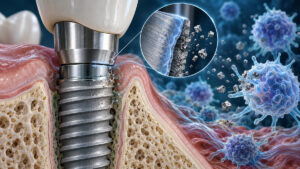
Titanium at the Peri-implant Interface: Corrosion, Wear and Particle Biology
PERI-EDU University Education Titanium is highly corrosion resistant, but it is not completely inert. Ions and particles can arise during placement, function, maintenance or treatment. Their presence can influence cells, yet detection alone does not prove that titanium caused peri-implantitis. Passivation protects titanium Titanium rapidly forms a thin oxide film
Primary Stability Without Overcompression: Insertion Torque, Bone Mechanics and Loading Decisions
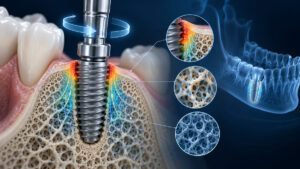
PERI-EDU University Education Insertion torque is one measure of rotational resistance at placement. It helps describe primary stability but does not independently predict osseointegration. The objective is adequate stability with preservation of bone vitality, not the highest possible torque. Primary stability is mechanical Primary stability is the mechanical resistance of
Reading Jawbone Quality on CBCT: Architecture, Grey Values and Diagnostic Limits
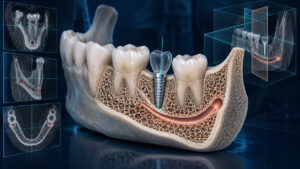
PERI-EDU University Education CBCT provides high-value three-dimensional information about anatomy and mineralized structure. It does not provide universal Hounsfield units, directly measure marrow fat or independently predict biological healing. Interpretation must integrate image quality, clinical findings and the purpose of the examination. What CBCT can show reliably Cone beam computed
Systemic Immune Disease and Cancer in Implant Care: Risk, Timing and Diagnostic Vigilance
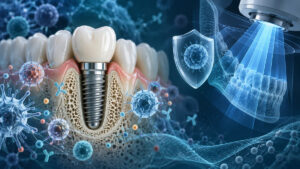
PERI-EDU University Education A diagnosis label alone rarely determines implant suitability. Disease activity, oral manifestations, current treatment, healing capacity and the planned procedure define the clinical risk. Persistent or atypical peri-implant lesions require a wider differential diagnosis. Risk begins with the current clinical state Autoimmune disorders and cancer-related conditions are
Osteoporosis and Long-Term Implant Stability: From Bone Fragility to Antiresorptive Care
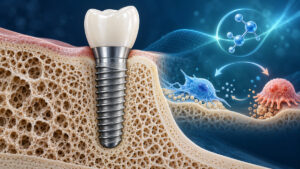
PERI-EDU University Education Osteoporosis and antiresorptive exposure are related but distinct clinical variables. Osteoporosis alone does not automatically contraindicate implant treatment. Medicine indication, dose, schedule, comorbidity and long-term peri-implant inflammation can change the risk profile. Systemic fragility and local jaw conditions Osteoporosis is a systemic skeletal disorder characterized by reduced
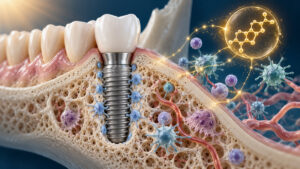
Vitamin D and the Bone-Immune Interface in Implant Healing
PERI-EDU University Education Vitamin D participates in mineral homeostasis, immune regulation and bone remodelling. This biological relevance does not justify routine testing of every implant candidate, a universal dental target or high-dose supplementation without a medical indication. Vitamin D physiology in context Vitamin D is a fat-soluble prohormone obtained through
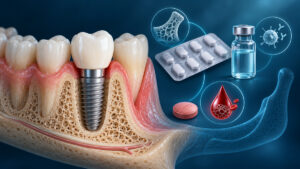
Medication-Related Risk Assessment in Implant Dentistry: MRONJ, Bleeding and Healing
PERI-EDU University Education Medication-related risk cannot be determined from a drug name alone. Implant planning should consider the therapeutic indication, dose, route, schedule, duration, current disease status and the biological burden of the proposed procedure. Medication history as a clinical risk map Medicines can alter bone turnover, haemostasis, immune response,
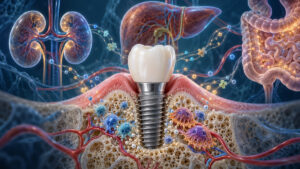
Systemic Organ Function and Implant Healing: Kidney, Liver, Gut and Bone Metabolism
PERI-EDU University Education Bone healing reflects both local surgical conditions and systemic regulation. Kidney, liver and intestinal disease can alter mineral balance, nutrition, immunity, medication handling or procedural safety. The diagnosis alone does not predict implant failure and should not replace individualized assessment. Bone as a systemically regulated tissue Bone
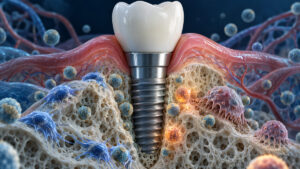
Dyslipidaemia and the Bone-Implant Interface: Oxidized Lipids, Redox Biology and Clinical Interpretation
PERI-EDU University Education Dyslipidaemia can alter inflammatory, vascular and skeletal biology, but most direct evidence for impaired osseointegration comes from experimental research. A lipid result contributes to the medical context and does not independently diagnose implant risk or determine eligibility. The lipid profile in clinical context A standard lipid profile
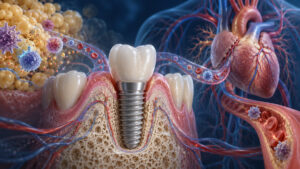
Cardiometabolic Conditions in Implant Dentistry: Shared Risk, Evidence Limits and Coordinated Care
PERI-EDU University Education Cardiovascular disease, obesity and metabolic syndrome can coexist with peri-implant disease through shared biological, behavioural and social pathways. Current evidence does not establish that one condition directly causes the other or that peri-implant treatment prevents cardiovascular events. Clinical care should combine accurate local diagnosis with assessment of
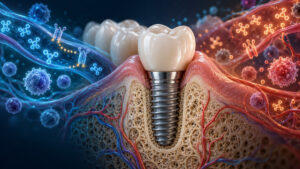
Glycaemic Control and Peri-implant Care: Translating Diabetes Biology into Clinical Decisions
PERI-EDU University Education Diabetes is not an automatic contraindication to implant therapy. Risk is better understood through current glycaemic control, diabetes-related complications, local inflammatory burden, procedural demands and the patient’s capacity for long-term maintenance. HbA1c contributes important context, but it cannot independently predict osseointegration or peri-implant disease. Diabetes is a
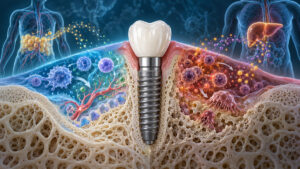
Inflammation Before and After Implant Placement: Metabolic Context, Redox Balance, and Bone Healing
PERI-EDU University Education Implant placement creates a controlled wound. The early inflammatory response initiates defence, debris clearance, vascular repair and bone remodelling. Successful healing requires this response to resolve and transition toward tissue formation. Persistent inflammatory and metabolic stress may disturb that sequence, but implant risk remains multifactorial and must
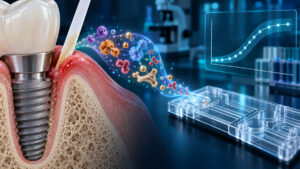
From Sampling to Signal: Biomarkers and Diagnostic Validation in Peri-implant Disease
PERI-EDU University Education Peri-implantitis is diagnosed from clinical inflammation and progressive supporting bone loss. Biomarkers may add information about current biological activity, tissue degradation or systemic inflammatory context, but their meaning depends on the sampling matrix, assay method and intended clinical decision. Different biomarker roles require different evidence Role Question
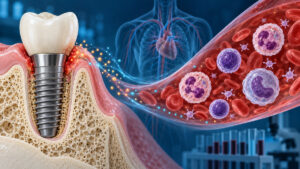
Reading Inflammation in the Blood: CBC-Derived Indices in Peri-implant Disease
PERI-EDU University Education Complete blood count-derived inflammatory indices summarize relationships among circulating neutrophils, lymphocytes, monocytes and platelets. NLR, PLR, MLR, SII, SIRI and AISI/PIV may describe the systemic inflammatory background of a patient with peri-implant disease, but they do not localize the source of inflammation and do not diagnose peri-implantitis.
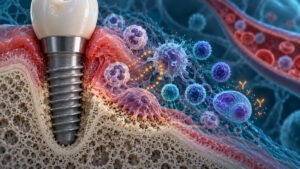
Inside the Peri-implant Inflammatory Lesion: Immune Signalling, Bone Resorption, and Systemic Context
PERI-EDU University Education Peri-implantitis produces an intense local immune lesion. Microbial exposure activates innate and adaptive responses, inflammatory mediators contribute to connective-tissue injury, and osteoclasts remove supporting bone. These local mechanisms are well supported. Claims about systemic consequences require a separate and more cautious level of evidence. The lesion develops
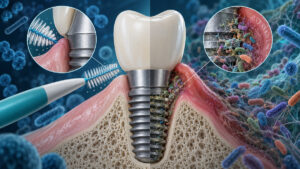
The Peri-implant Biofilm Ecosystem: Dysbiosis, Cleansability, and Local Disease Drivers
PERI-EDU University Education Biofilm provides the primary microbial exposure in peri-implant mucositis and peri-implantitis. The clinical outcome, however, depends on more than the amount of visible plaque. Host susceptibility, implant surface characteristics, tissue architecture and prosthetic access shape the ecological niche in which the biofilm develops. Educational focus: peri-implant biofilm
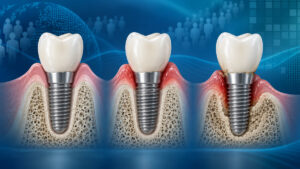
Understanding Peri-implantitis: Disease Burden, Progression, and Clinical Relevance
PERI-EDU University Education Peri-implantitis is not defined by a single deep probing measurement or by bleeding alone. It is a biofilm-associated pathological condition in which inflammation of the peri-implant mucosa is accompanied by progressive loss of supporting bone. Understanding how the disease is defined, measured and followed over time is
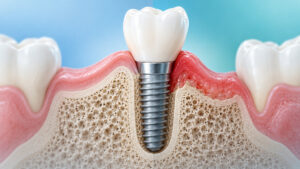
Peri-implant Tissue Inflammation: Recognising Reversible Mucositis and Progressive Bone Loss
PERI-EDU University Education Inflammation around a dental implant can remain confined to the peri-implant mucosa or progress to destruction of the supporting bone. Distinguishing these conditions is essential because peri-implant mucositis can usually be controlled before structural support is lost, whereas peri-implantitis requires a more complex diagnostic and therapeutic pathway.
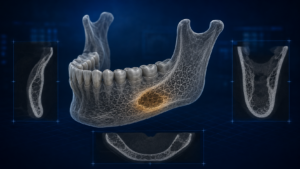
Focal Low-Trabeculation and Low-Density Jawbone Findings on CBCT: Frequency and Systemic Associations
PERI-EDU Research Focal Low-Trabeculation and Low-Density Jawbone Findings on CBCT: Frequency and Systemic Associations A retrospective study of 1,000 adults examined how often a study-defined, nonspecific intramedullary jawbone imaging phenotype was identified on CBCT and explored its relationships with age, systemic diseases, anatomical location and visibility on panoramic radiographs. Journal
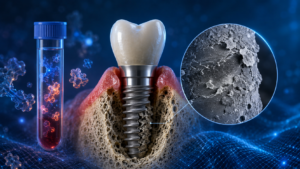
Clinical Severity, Pre- and Post-Explantation Cytokine Profile and SEM/EDX-Defined Corrosion-Related Findings in Advanced Peri-Implantitis: Preliminary Results from the PERI-EDU Prospective Exploratory Clinical Study
PERI-EDU Research Advanced Peri-Implantitis, Systemic Cytokines and Implant Corrosion: Preliminary Results from the PERI-EDU Study A prospective exploratory clinical study combined clinical examination, CBCT-based assessment of bone loss, paired blood sampling and SEM/EDX analysis of explanted implants to investigate how severe peri-implantitis may connect local tissue destruction with systemic inflammation

From immunology to clinical decision-making. How can basic sciences be connected with implant practice?
Peri-implantitis is a good example of a disease in which knowledge of immunology, microbiology, bone biology, and systemic diseases directly influences the understanding of the clinical situation. What students learn as mechanisms of inflammatory response, cytokine activation, or bone resorption becomes, in implant dentistry, the basis for interpreting a real

Data, indices and critical thinking. How can students be prepared for modern peri-implantitis diagnostics?
Modern diagnostics of peri-implantitis is not only about collecting individual parameters, but about interpreting them responsibly. Bleeding on probing, pocket depth, radiological findings, soft tissue condition, history of periodontitis, systemic diseases and potential inflammatory markers should be understood as elements of one clinical puzzle. The PERI-EDU project shows that academic

How should we teach peri-implantitis as a multifactorial disease?
Peri-implantitis is increasingly difficult to present to students solely as a local complication related to bacterial biofilm. Biofilm remains the starting point, but the course of the disease also depends on the host immune response, bone biology, systemic diseases, local factors, prosthetics, and long-term patient maintenance. The PERI-EDU project shows