
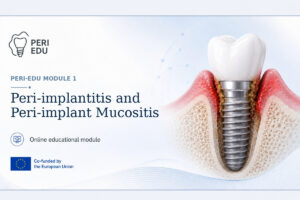
PERI-EDU Module 1. Peri-implantitis and Peri-implant Mucositis
This online educational module explores the biological and clinical processes involved in the development and progression of peri-implantitis — from the formation of peri-implant biofilm to inflammatory tissue destruction and progressive bone loss. Participants will learn how local microbial factors, the host inflammatory response, systemic conditions and clinical findings should be considered together when assessing peri-implant disease. The module supports evidence-based thinking and helps connect basic biological mechanisms with clinical diagnosis and decision-making. The learning pathway includes an initial knowledge assessment, an educational presentation, a post-training assessment, a short module evaluation and a certificate of completion. Estimated time: 60 minutesFormat:
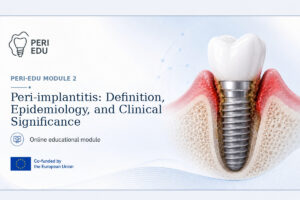
PERI-EDU Module 2. Peri-implantitis: Definition, Epidemiology, and Clinical Significance
This online educational module provides a structured overview of the current definitions of peri-implantitis and explains how the condition differs from peri-implant health and peri-implant mucositis. It examines the reported prevalence and incidence of peri-implantitis, highlighting how differences in diagnostic criteria, study populations and observation periods influence epidemiological estimates. Participants will learn about the typical course and progression of peri-implantitis, including the clinical importance of bleeding and/or suppuration on probing, increased probing depths and progressive peri-implant bone loss. The module also discusses the consequences of delayed diagnosis, such as increasing treatment complexity, deterioration of peri-implant tissues and potential implant loss.
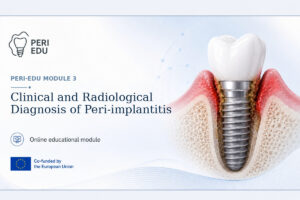
PERI-EDU Module 3. Clinical and Radiological Diagnosis of Peri-implantitis
This online educational module presents the clinical and radiological criteria used to diagnose peri-implantitis. It explains the correct use of peri-implant probing, interpretation of bleeding and suppuration on probing, assessment of probing depth and evaluation of changes compared with baseline clinical findings. Participants will learn how to assess marginal bone levels using standardized radiographs and when three-dimensional imaging may provide additional information. The module discusses the importance of baseline documentation, measurement reproducibility and differentiation between physiological bone remodelling and pathological bone loss. Emphasis is placed on combining clinical and radiological findings rather than relying on a single diagnostic parameter. The
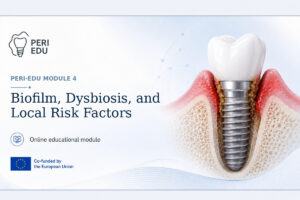
PERI-EDU Module 4. Biofilm, Dysbiosis, and Local Risk Factors
This online educational module explores the role of peri-implant biofilm and microbial dysbiosis in the initiation and progression of peri-implant diseases. It explains how changes in the local microbial environment interact with the host immune response and may contribute to inflammation and destruction of the supporting tissues. Participants will learn to identify important local risk indicators, including inadequate plaque control, prosthetic designs that restrict cleaning, residual cement, implant malposition and previous periodontal disease. The module emphasizes the clinical importance of detecting modifiable plaque-retentive factors and improving access for oral hygiene. Particular attention is given to integrating biological, prosthetic and patient-related
PERI-EDU Module 5. Peri-implantitis, Systemic Inflammation, and Inflammatory Pathways
This online educational module examines the inflammatory response associated with peri-implantitis and its potential relationship with systemic inflammation. It introduces the principal cellular and molecular mechanisms involved in disease development, including activation of innate and adaptive immune cells, cytokine signalling and osteoclast-mediated bone resorption. Participants will learn how persistent microbial stimulation may disrupt the balance between protective immunity and destructive inflammation. The module discusses selected inflammatory mediators and pathways involved in soft-tissue breakdown and peri-implant bone loss. Emphasis is placed on understanding peri-implantitis as a complex interaction between biofilm, host susceptibility and local and systemic modifying factors. The learning pathway
PERI-EDU Module 6. Blood Inflammatory Indices
This online educational module introduces inflammatory indices calculated from routine complete blood count parameters. It explains the components and interpretation of indices such as the neutrophil-to-lymphocyte ratio, platelet-to-lymphocyte ratio, monocyte-to-lymphocyte ratio, systemic immune-inflammation index and other composite inflammatory measures. Participants will learn how these indices may reflect different aspects of systemic immune and inflammatory activity and how they are calculated from standard laboratory results. The module also addresses their potential clinical applications and major limitations, including their non-specific nature and sensitivity to infections, medications and systemic diseases. These indices are presented as supportive parameters rather than independent diagnostic tests. The
PERI-EDU Module 7. Biomarkers and Inflammatory Indices in Peri-implantitis Diagnosis
This online educational module reviews the potential application of inflammatory biomarkers and blood-derived indices in the diagnosis and monitoring of peri-implantitis. It discusses selected systemic and local markers measured in blood, saliva or peri-implant crevicular fluid, including C-reactive protein, interleukins and tumour necrosis factor. Participants will learn how biomarker profiles may complement clinical and radiological assessment by providing information about inflammatory activity and host response. The module explains the differences between diagnostic, prognostic and monitoring biomarkers and discusses factors that may influence laboratory results. Particular emphasis is placed on current evidence limitations and the need to interpret biomarkers as adjunctive
PERI-EDU Module 8. Metainflammation and Implant Treatment
This online educational module explains the concept of metainflammation – a chronic, low-grade inflammatory state associated with metabolic disturbances such as obesity, insulin resistance and dyslipidaemia. It examines how persistent metabolic inflammation may affect immune regulation, bone metabolism and tissue healing around dental implants. Participants will learn about the potential influence of adipose-tissue mediators, altered glucose and lipid metabolism and oxidative stress on osseointegration and peri-implant tissue stability. The module emphasizes comprehensive medical assessment, identification of modifiable risk factors and optimization of systemic health before and during implant treatment. Current evidence and areas requiring further clinical research are also discussed.
PERI-EDU Module 9. Diabetes, Insulin Resistance, and Impaired Peri-implant Healing
This online educational module examines how diabetes, insulin resistance and inadequate glycaemic control may influence osseointegration, wound healing and the long-term condition of peri-implant tissues. It explains the effects of chronic hyperglycaemia on immune function, microcirculation, collagen metabolism and bone remodelling. Participants will learn how to incorporate medical history, glycaemic control and the presence of diabetes-related complications into implant risk assessment. The module discusses the importance of interdisciplinary communication, individualized treatment planning and appropriate maintenance protocols. Emphasis is placed on the distinction between well-controlled and poorly controlled disease and on avoiding the automatic exclusion of every patient with diabetes from
PERI-EDU Module 10. Cardiovascular Disease, Obesity, and Metabolic Syndrome
This online educational module explores the relationships between cardiovascular disease, obesity, metabolic syndrome and the risk of complications associated with implant treatment. It discusses shared biological mechanisms, including chronic low-grade inflammation, endothelial dysfunction, insulin resistance and oxidative stress. Participants will learn how cardiovascular status, body composition, metabolic abnormalities, medications and functional limitations may affect treatment planning, healing and long-term peri-implant care. The module emphasizes comprehensive medical history, identification of modifiable risk factors and collaboration with the patient’s physician when necessary. These conditions are presented as factors requiring individualized assessment rather than universal contraindications to dental implant therapy. The learning pathway
PERI-EDU Module 11. Hyperlipidemia, oxLDL, and Oxidative Stress
This online educational module examines the potential influence of hyperlipidaemia, oxidized low-density lipoproteins and oxidative stress on inflammation, bone metabolism and peri-implant tissue health. It explains how lipid abnormalities and excessive production of reactive oxygen species may affect immune cells, endothelial function and the activity of bone-forming and bone-resorbing cells. Participants will learn about the biological links between altered lipid metabolism, chronic inflammation and impaired tissue homeostasis. The module also discusses potential implications for osseointegration and peri-implant disease susceptibility. Particular attention is given to the limitations of the available evidence and the importance of integrating laboratory findings with the patient’s
PERI-EDU Module 12. Metabolic Organ Diseases and Bone Metabolism
This online educational module explores how systemic organ diseases and metabolic disturbances may affect bone turnover, mineral homeostasis and implant treatment outcomes. It addresses selected conditions involving the kidneys, liver and endocrine system that can influence calcium and phosphate regulation, vitamin D metabolism, immune function and skeletal health. Participants will learn how organ dysfunction, altered bone metabolism and associated pharmacotherapy should be considered during patient qualification and treatment planning. The module emphasizes the importance of reviewing medical history and relevant laboratory findings and obtaining specialist consultation when indicated. Particular attention is given to adapting surgical procedures, healing periods and supportive
PERI-EDU Module 13. Vitamin D, Osteoimmunology, and Bone Metabolism
This online educational module presents the role of vitamin D in calcium and phosphate homeostasis, immune regulation and bone metabolism. It introduces the principles of osteoimmunology and explains how interactions between immune cells, osteoblasts and osteoclasts regulate bone formation and resorption around dental implants. Participants will learn about the potential consequences of vitamin D deficiency and disturbed bone turnover for osseointegration and peri-implant tissue stability. The module discusses indications for risk-based laboratory assessment and the interpretation of vitamin D status in the context of the patient’s general health. Current evidence concerning supplementation and implant treatment outcomes is presented with appropriate
PERI-EDU Module 14. Osteoporosis, Antiresorptive Therapy, and Implant-Related Complications
This online educational module examines the implications of osteoporosis and antiresorptive therapy for dental implant treatment. It explains how reduced bone mass, altered bone microarchitecture and medications such as bisphosphonates or denosumab may influence bone healing, implant stability and the risk of treatment-related complications. Participants will learn how to assess medication type, route of administration, treatment duration, underlying disease and additional systemic risk factors. The module also introduces the risk of medication-related osteonecrosis of the jaw and discusses principles of informed consent, interdisciplinary consultation and postoperative monitoring. Emphasis is placed on individualized risk assessment and avoiding unplanned modification or discontinuation
PERI-EDU Module 15. Autoimmune Diseases, Cancer-Related Conditions, and Other Systemic Risk Factors
This online educational module discusses the influence of autoimmune diseases, cancer-related conditions and other systemic risk factors on implant treatment and peri-implant tissue health. It considers the potential effects of immune dysregulation, immunosuppressive therapy, corticosteroids, biological medications, chemotherapy and radiotherapy on healing, infection susceptibility and bone metabolism. Participants will learn how to evaluate disease activity, treatment status, medication-related risks and the timing of implant procedures. The module emphasizes individualized qualification, communication with the treating physician and modification of surgical and maintenance protocols when necessary. Particular attention is given to balancing the potential benefits of implant treatment against systemic and local
PERI-EDU Module 16. CBCT, Bone Quality, and Marrow Adiposity
This online educational module explains the use of cone-beam computed tomography in the assessment of bone dimensions, anatomical structures and local conditions relevant to implant treatment. It discusses evaluation of cortical and trabecular architecture, available bone volume and potential anatomical limitations affecting implant placement. Participants will learn how imaging findings may contribute to treatment planning and estimation of primary implant stability. The module also introduces the concept of bone marrow adiposity and its potential relationship with ageing, metabolic disease and bone quality. Particular emphasis is placed on the limitations of CBCT grey values, which should not be interpreted as calibrated
PERI-EDU Module 17. Biomechanics, Insertion Torque, and Bone Density
This online educational module presents the biomechanical principles that influence primary implant stability and subsequent osseointegration. It explains the relationships between bone density, implant geometry, osteotomy preparation, insertion torque and mechanical loading. Participants will learn how insertion torque and other stability measurements can support clinical decision-making while recognizing that no single value guarantees long-term treatment success. The module discusses the potential consequences of both insufficient stability and excessive compression of the surrounding bone. Emphasis is placed on adapting the surgical protocol to bone conditions, implant design and the planned loading strategy while maintaining biological conditions favourable for healing. The learning
PERI-EDU Module 18. Corrosion, Tribocorrosion, and Titanium Particles
This online educational module introduces the mechanisms of corrosion and tribocorrosion affecting titanium implants and implant-supported restorations. It explains how electrochemical processes, mechanical wear, micromovement and interactions with the oral environment may damage the protective oxide layer on titanium surfaces. Participants will learn how titanium ions and particles may be released into peri-implant tissues and how these products could interact with inflammatory cells and local tissue responses. The module discusses potential contributing factors, including implant-abutment connections, surface contamination, instrumentation and mechanical overload. Current evidence concerning the biological and clinical significance of titanium particles is presented together with its limitations. The
PERI-EDU Module 19. Medications, Contraindications, and MRONJ
This online educational module reviews the medications and general medical conditions that may affect qualification for implant treatment, surgical healing and long-term peri-implant care. It discusses antiresorptive, antiangiogenic, immunosuppressive and other therapies that may modify bleeding, infection, immune response or bone turnover. Participants will learn how to identify absolute and relative contraindications, evaluate medication-related risks and determine when medical consultation is required. Particular attention is given to medication-related osteonecrosis of the jaw, including important risk factors, preventive measures and patient communication. The module emphasizes individualized decision-making and advises against modifying prescribed systemic treatment without consultation with the responsible physician. The

PERI-EDU Module 20. Prevention, Treatment Planning, Supportive Care, and Interdisciplinary Management
This online educational module integrates the principles of peri-implant disease prevention, comprehensive treatment planning and long-term supportive care. It explains how patient-related, systemic, anatomical, surgical and prosthetic factors should be assessed before implant placement and throughout the maintenance period. Participants will learn how to develop individualized recall schedules, monitor peri-implant tissues and reinforce effective oral hygiene. The module emphasizes prosthetic designs that facilitate cleaning, early management of inflammation and regular comparison with baseline clinical and radiological findings. Particular attention is given to collaboration between dentists, hygienists, physicians and other healthcare professionals in patients with complex medical or implant-related risk profiles.