
PERI-EDU extended its educational activities beyond dentistry by reaching 187 physicians undergoing specialist training in family medicine. On 9 October 2026, Prof. Marzena Dominiak delivered an online lecture during the compulsory course Selected Problems in Family Medicine.
Why peri-implantitis matters in primary care
Patients with dental implants are also patients of family physicians. They may present with diabetes, obesity, cardiovascular disease, immune dysregulation, smoking-related risk or other conditions that can influence inflammatory responses and healing. Awareness of peri-implant diseases can therefore support earlier recognition of oral problems, more effective communication with dental professionals and better coordination of care.
The lecture introduced peri-implantitis as a plaque-associated inflammatory condition affecting the tissues around dental implants. The presentation connected local clinical manifestations with the patient’s wider medical context and emphasized that persistent inflammation around an implant requires dental examination and appropriate radiographic assessment.
Recognizing warning signs
Bleeding, suppuration, swelling, discomfort, implant mobility or persistent symptoms around an implant should prompt referral for dental assessment.
Understanding systemic context
General health, medications, smoking and metabolic or inflammatory disorders may affect susceptibility, healing and long-term maintenance.
Coordinating patient care
Information exchanged between primary care physicians and dental teams can improve risk assessment and support individualized preventive care.
Blood-cell-derived inflammatory indices in PERI-EDU research
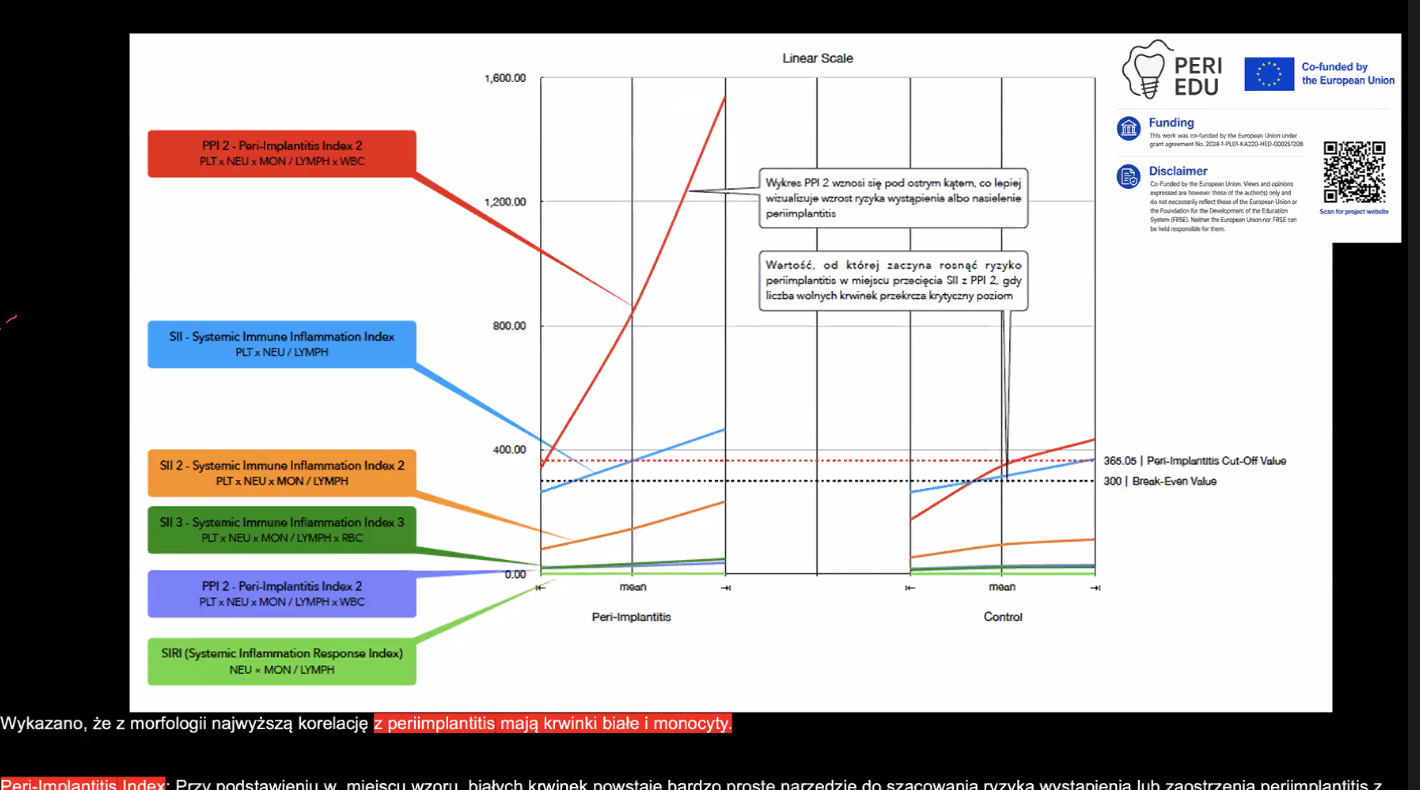
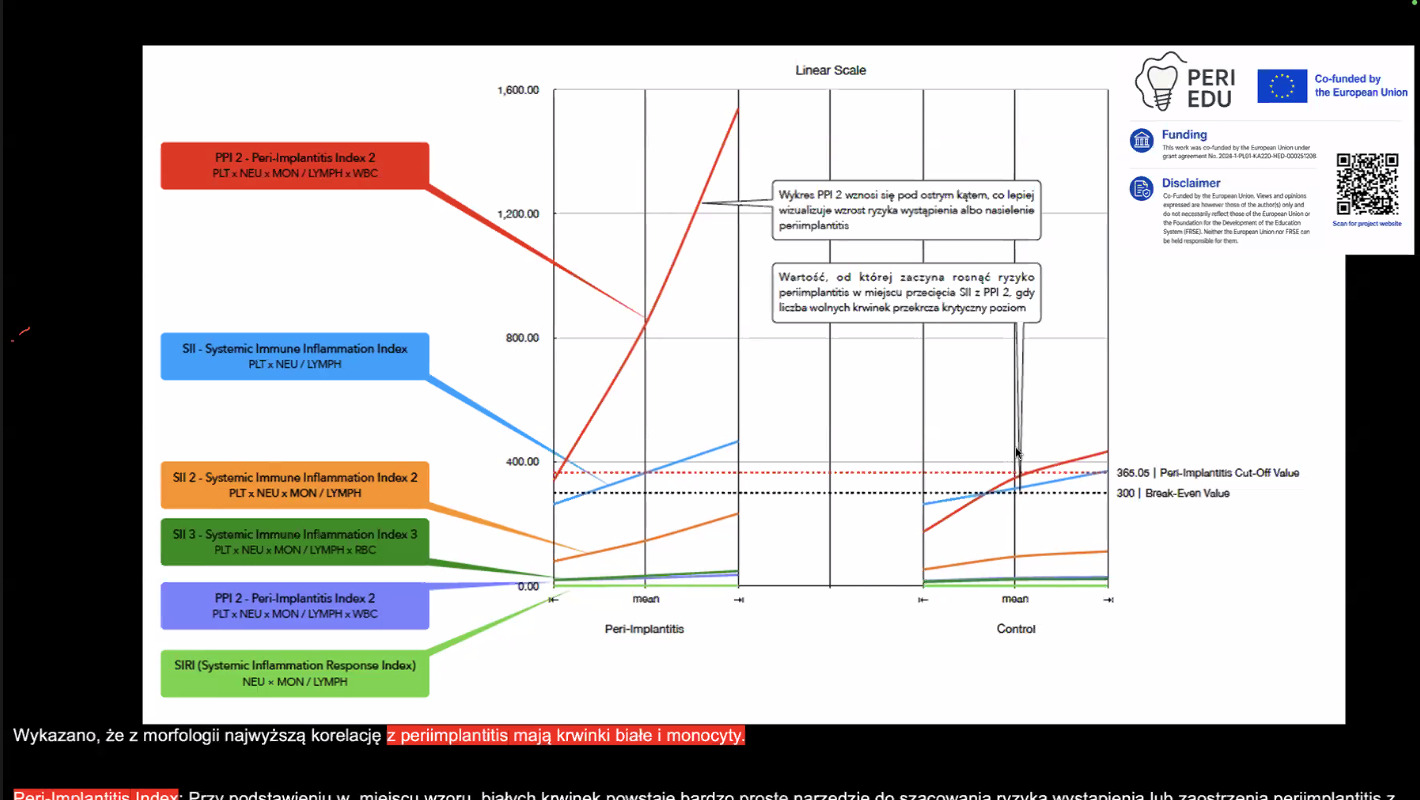
The educational session also presented PERI-EDU research concerning inflammatory indices calculated from routine complete blood count parameters. These included the Systemic Immune-Inflammation Index and exploratory peri-implantitis-related indices combining leukocyte, neutrophil, monocyte, lymphocyte and platelet values.
Clinical interpretation requires caution
Blood-cell-derived inflammatory indices are supportive research measures. They are not specific to peri-implantitis and must not be used as stand-alone diagnostic tests. Diagnosis continues to depend on clinical examination, peri-implant probing findings, comparison with previous records and radiographic assessment of bone levels.
Connecting dental education with family medicine
Presenting PERI-EDU to physicians in specialist training supports a genuinely interdisciplinary approach to oral and systemic health. Family physicians are well positioned to reinforce smoking cessation, metabolic control, adherence to treatment and the importance of regular dental maintenance, while dental teams can alert physicians when a patient’s medical condition may require further evaluation.
Educational reach
The participation of 187 physicians demonstrates how PERI-EDU resources can be disseminated beyond dental curricula and used to strengthen cooperation between dentistry and primary care.
This initiative brings PERI-EDU closer to its goal of improving the prevention and early recognition of peri-implant diseases through accessible, evidence-based and interdisciplinary education.
PERI-EDU — “Integrating Peri-Implantitis Research into Higher Education Curriculum,” project no. 2024-1-PL01-KA220-HED-000251208, co-funded by the European Union. Views and opinions expressed are, however, those of the author(s) only and do not necessarily reflect those of the European Union or the Foundation for the Development of the Education System. Neither the European Union nor the granting authority can be held responsible for them.