
Modern Peri-implantitis Treatment: Laser Therapy and Surgical Decision-Making
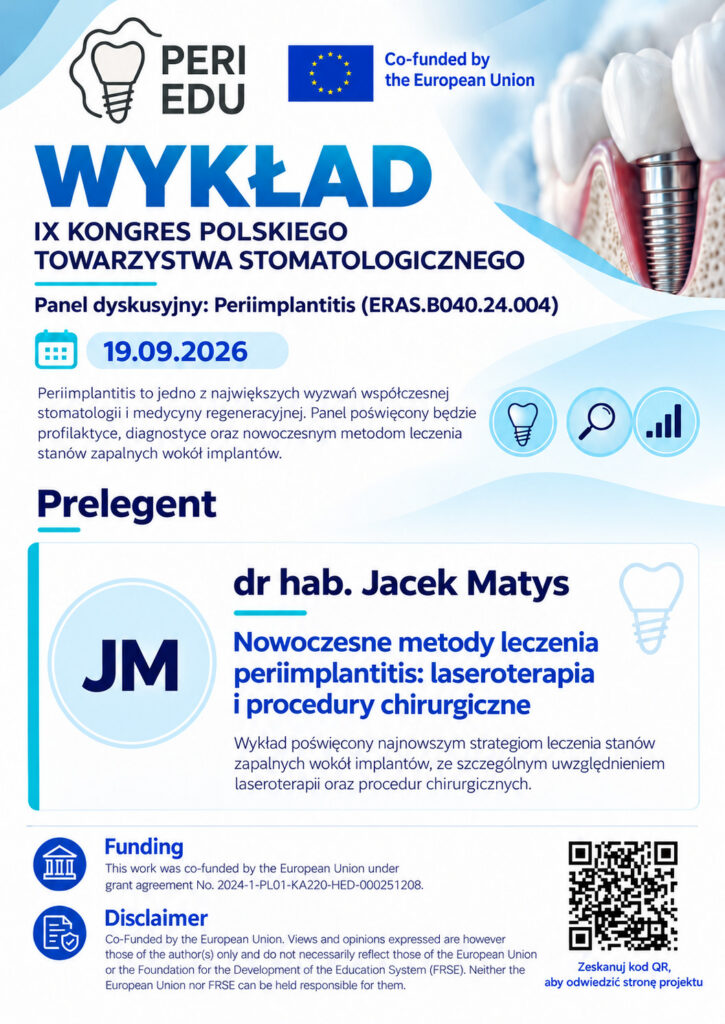
PERI-EDU University Education · Recorded lecture Successful treatment of peri-implantitis is not defined by a single instrument, laser wavelength or grafting material. It requires control of the biofilm-associated lesion, correction of accessible local drivers, appropriate surface decontamination and a surgical strategy matched to defect anatomy and treatment goals. Event9th Congress of the Polish Dental Association […]
Blood-Derived Inflammatory Indices in Peri-implant Disease: Interpretation and Limits
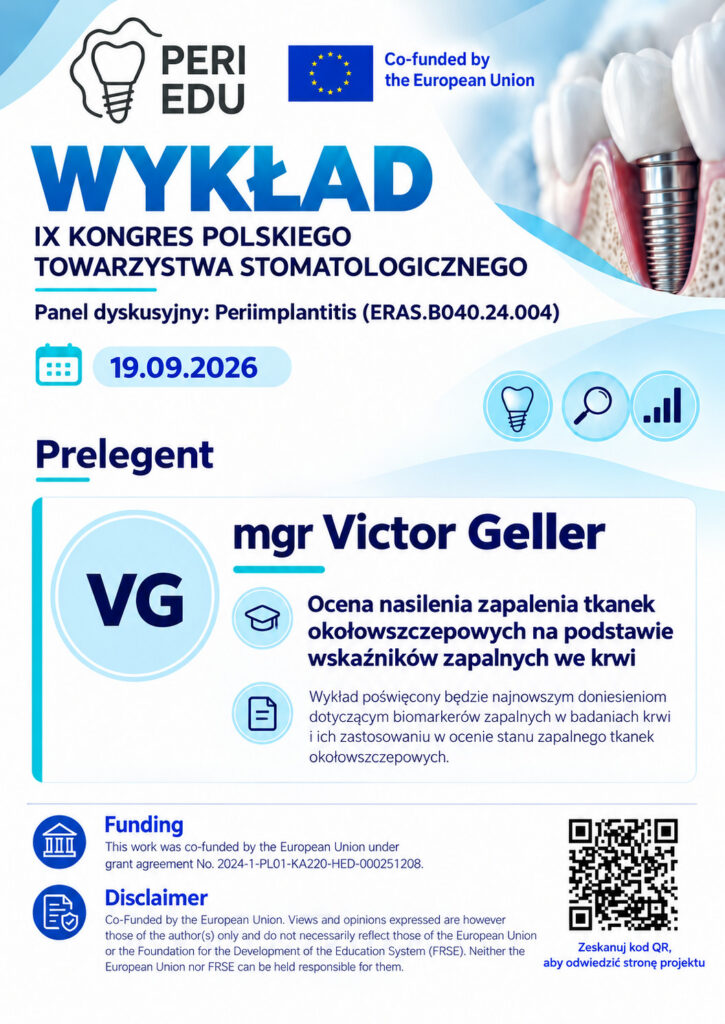
PERI-EDU University Education · Recorded lecture Complete blood count-derived inflammatory indices combine routine neutrophil, lymphocyte, monocyte and platelet counts into ratios or composite measures. They may describe a patient’s systemic inflammatory background, but they do not identify the anatomical source of inflammation and cannot diagnose peri-implantitis. Event9th Congress of the Polish Dental Association SessionPERI-EDU panel: […]
Preventing Peri-implant Disease: Risk Control and Early Diagnosis
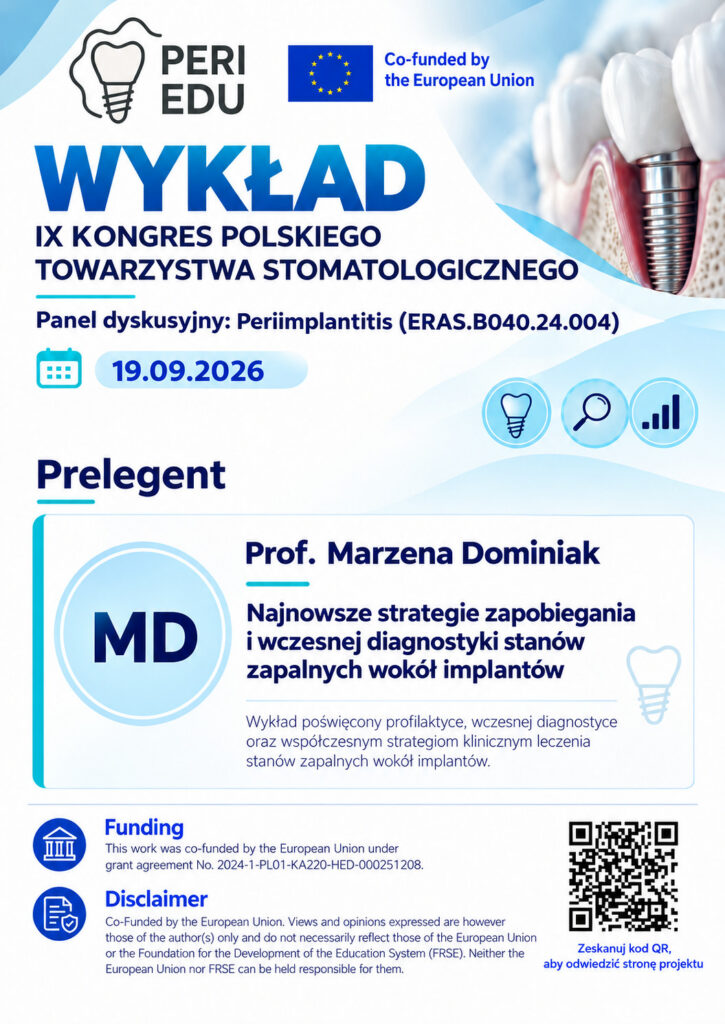
PERI-EDU University Education · Recorded lecture Peri-implant disease prevention begins before inflammation is detected. It combines patient-level risk control, prosthetic cleansability, systematic maintenance and reproducible baseline documentation. Early diagnosis then depends on recognising change over time rather than interpreting one isolated measurement. Event9th Congress of the Polish Dental Association SessionPERI-EDU panel: Periimplantitis Date19 September 2026 […]
Titanium at the Peri-implant Interface: Corrosion, Wear and Particle Biology
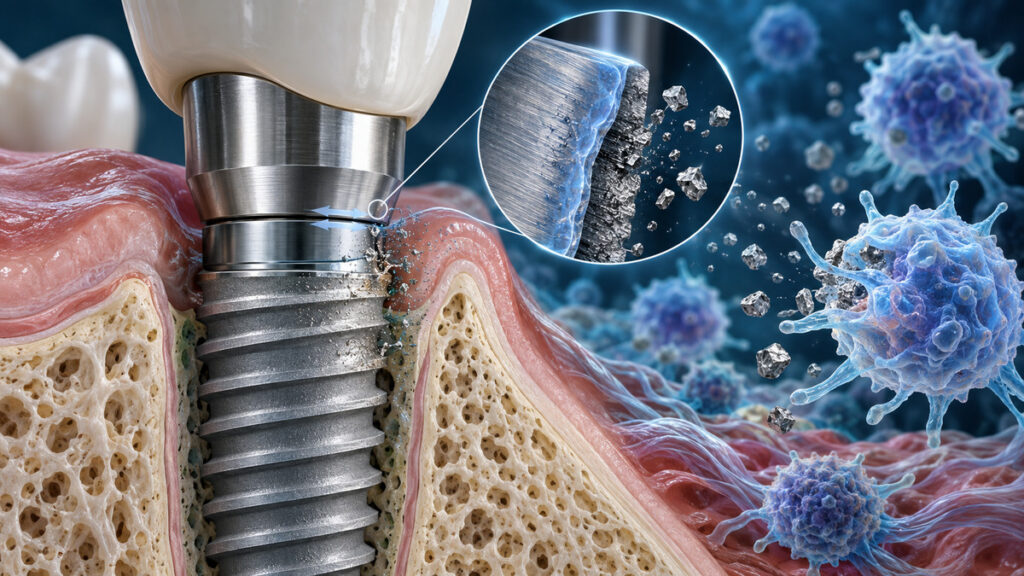
PERI-EDU University Education Titanium is highly corrosion resistant, but it is not completely inert. Ions and particles can arise during placement, function, maintenance or treatment. Their presence can influence cells, yet detection alone does not prove that titanium caused peri-implantitis. Passivation protects titanium Titanium rapidly forms a thin oxide film when exposed to oxygen and […]
Primary Stability Without Overcompression: Insertion Torque, Bone Mechanics and Loading Decisions
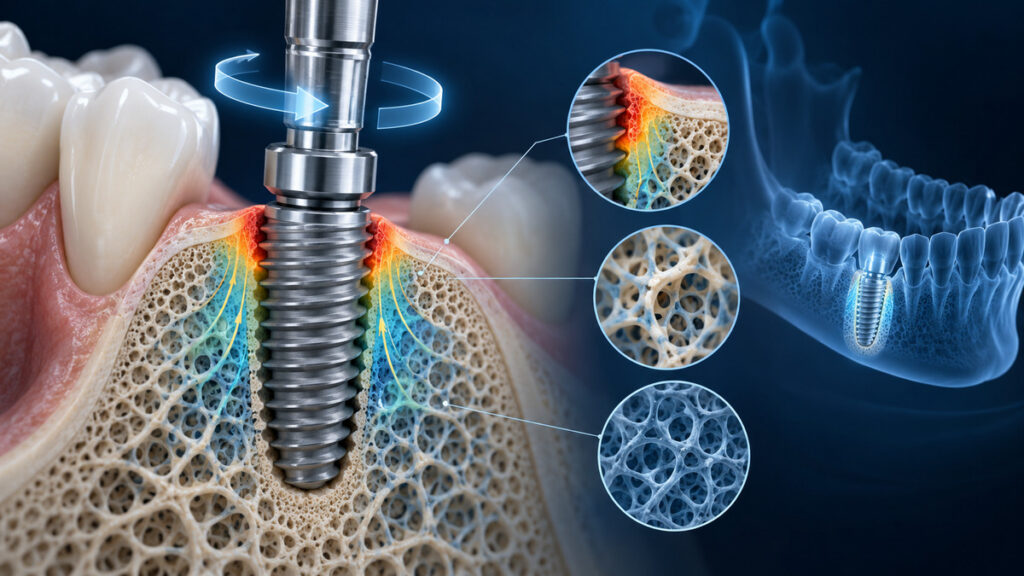
PERI-EDU University Education Insertion torque is one measure of rotational resistance at placement. It helps describe primary stability but does not independently predict osseointegration. The objective is adequate stability with preservation of bone vitality, not the highest possible torque. Primary stability is mechanical Primary stability is the mechanical resistance of an implant immediately after placement. […]
Reading Jawbone Quality on CBCT: Architecture, Grey Values and Diagnostic Limits
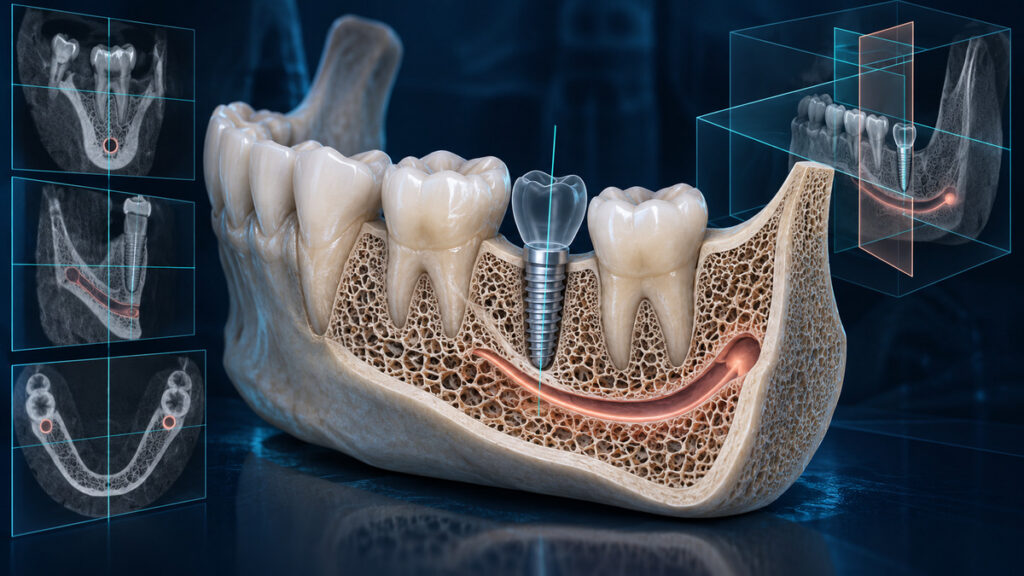
PERI-EDU University Education CBCT provides high-value three-dimensional information about anatomy and mineralized structure. It does not provide universal Hounsfield units, directly measure marrow fat or independently predict biological healing. Interpretation must integrate image quality, clinical findings and the purpose of the examination. What CBCT can show reliably Cone beam computed tomography reconstructs a three-dimensional volume […]
Systemic Immune Disease and Cancer in Implant Care: Risk, Timing and Diagnostic Vigilance
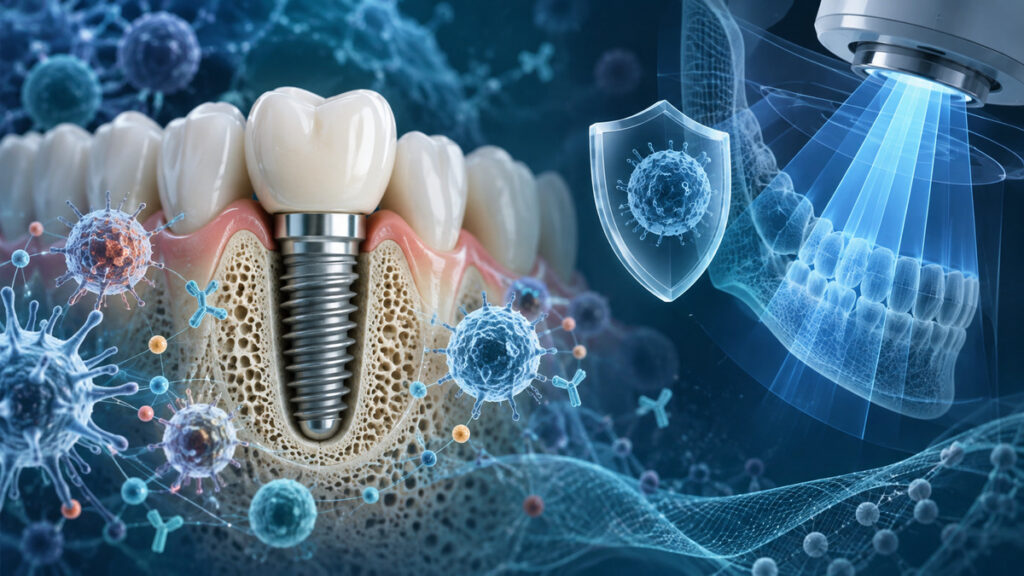
PERI-EDU University Education A diagnosis label alone rarely determines implant suitability. Disease activity, oral manifestations, current treatment, healing capacity and the planned procedure define the clinical risk. Persistent or atypical peri-implant lesions require a wider differential diagnosis. Risk begins with the current clinical state Autoimmune disorders and cancer-related conditions are heterogeneous. The same diagnosis can […]
Osteoporosis and Long-Term Implant Stability: From Bone Fragility to Antiresorptive Care
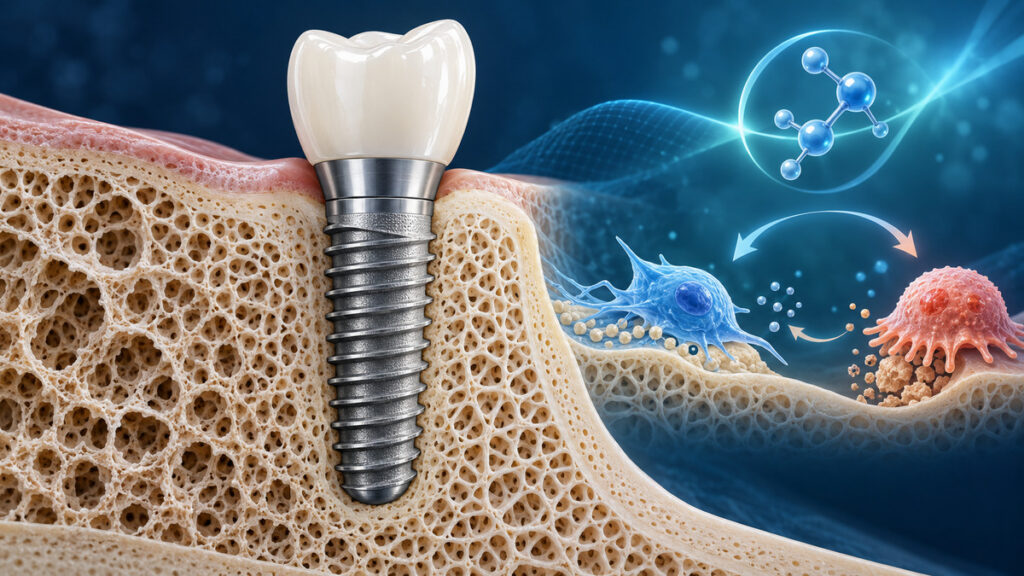
PERI-EDU University Education Osteoporosis and antiresorptive exposure are related but distinct clinical variables. Osteoporosis alone does not automatically contraindicate implant treatment. Medicine indication, dose, schedule, comorbidity and long-term peri-implant inflammation can change the risk profile. Systemic fragility and local jaw conditions Osteoporosis is a systemic skeletal disorder characterized by reduced bone strength and increased fracture […]
Vitamin D and the Bone-Immune Interface in Implant Healing
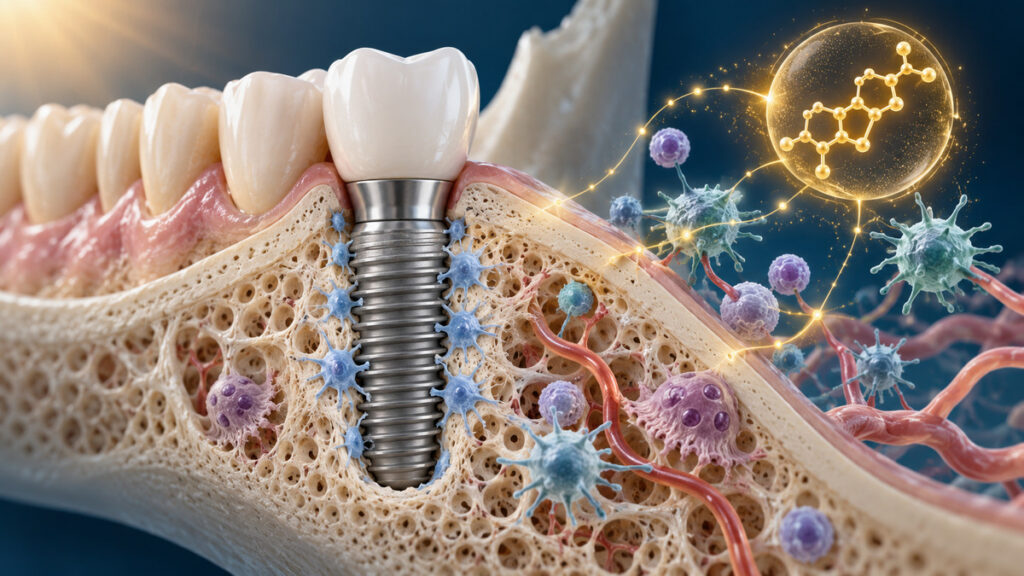
PERI-EDU University Education Vitamin D participates in mineral homeostasis, immune regulation and bone remodelling. This biological relevance does not justify routine testing of every implant candidate, a universal dental target or high-dose supplementation without a medical indication. Vitamin D physiology in context Vitamin D is a fat-soluble prohormone obtained through cutaneous synthesis, food and supplements. […]
Medication-Related Risk Assessment in Implant Dentistry: MRONJ, Bleeding and Healing
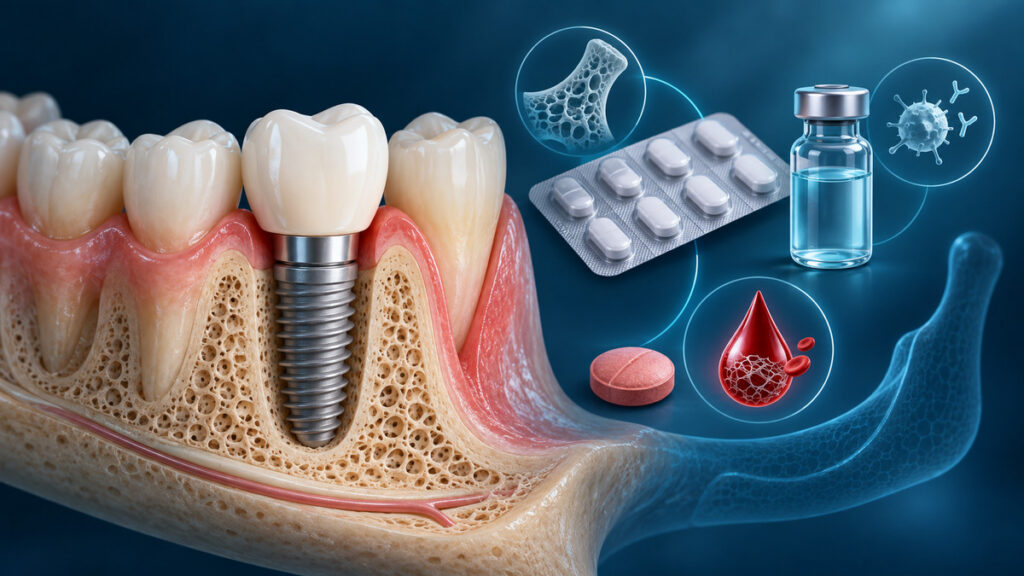
PERI-EDU University Education Medication-related risk cannot be determined from a drug name alone. Implant planning should consider the therapeutic indication, dose, route, schedule, duration, current disease status and the biological burden of the proposed procedure. Medication history as a clinical risk map Medicines can alter bone turnover, haemostasis, immune response, glucose control, vascular function and […]