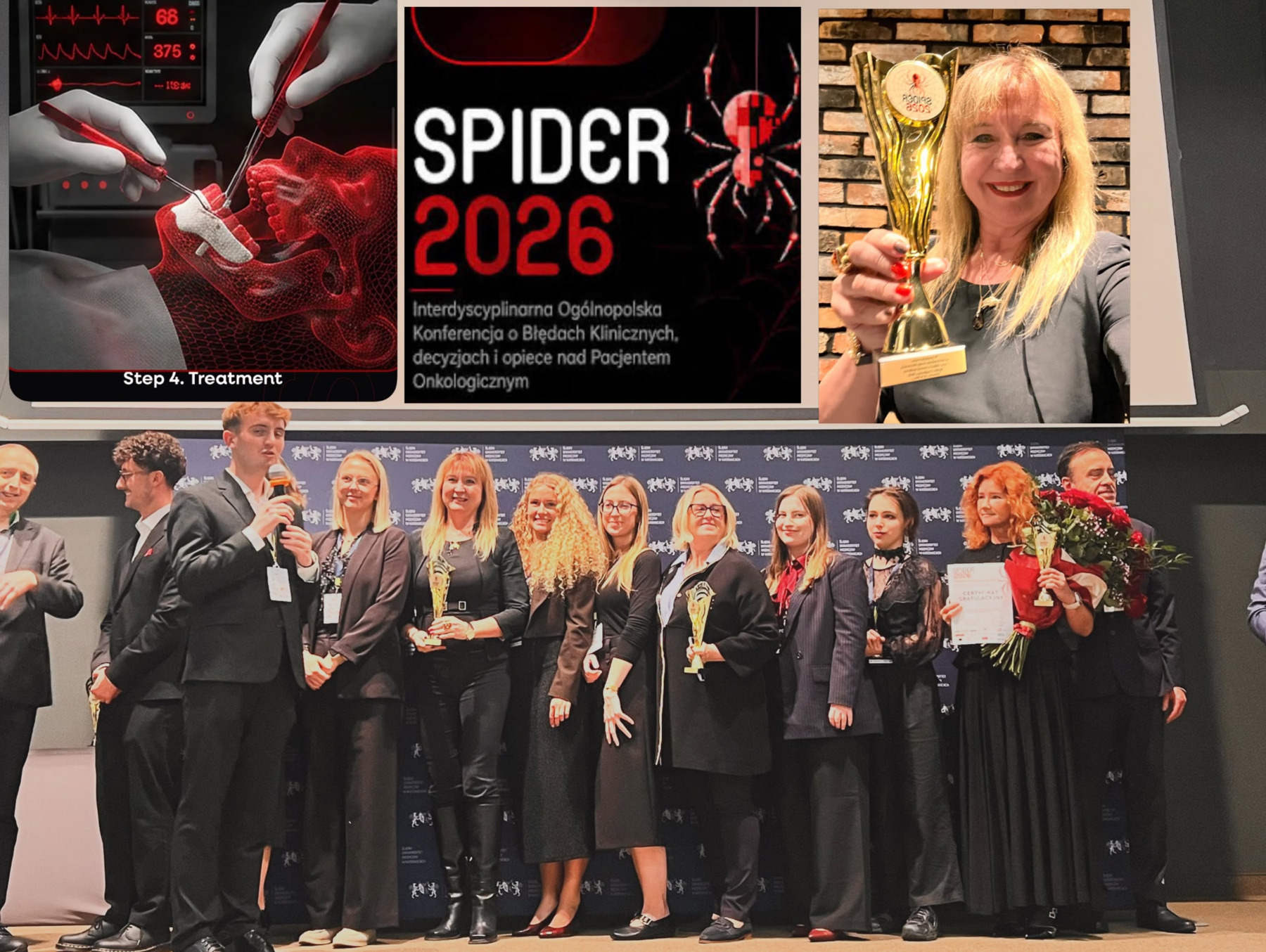
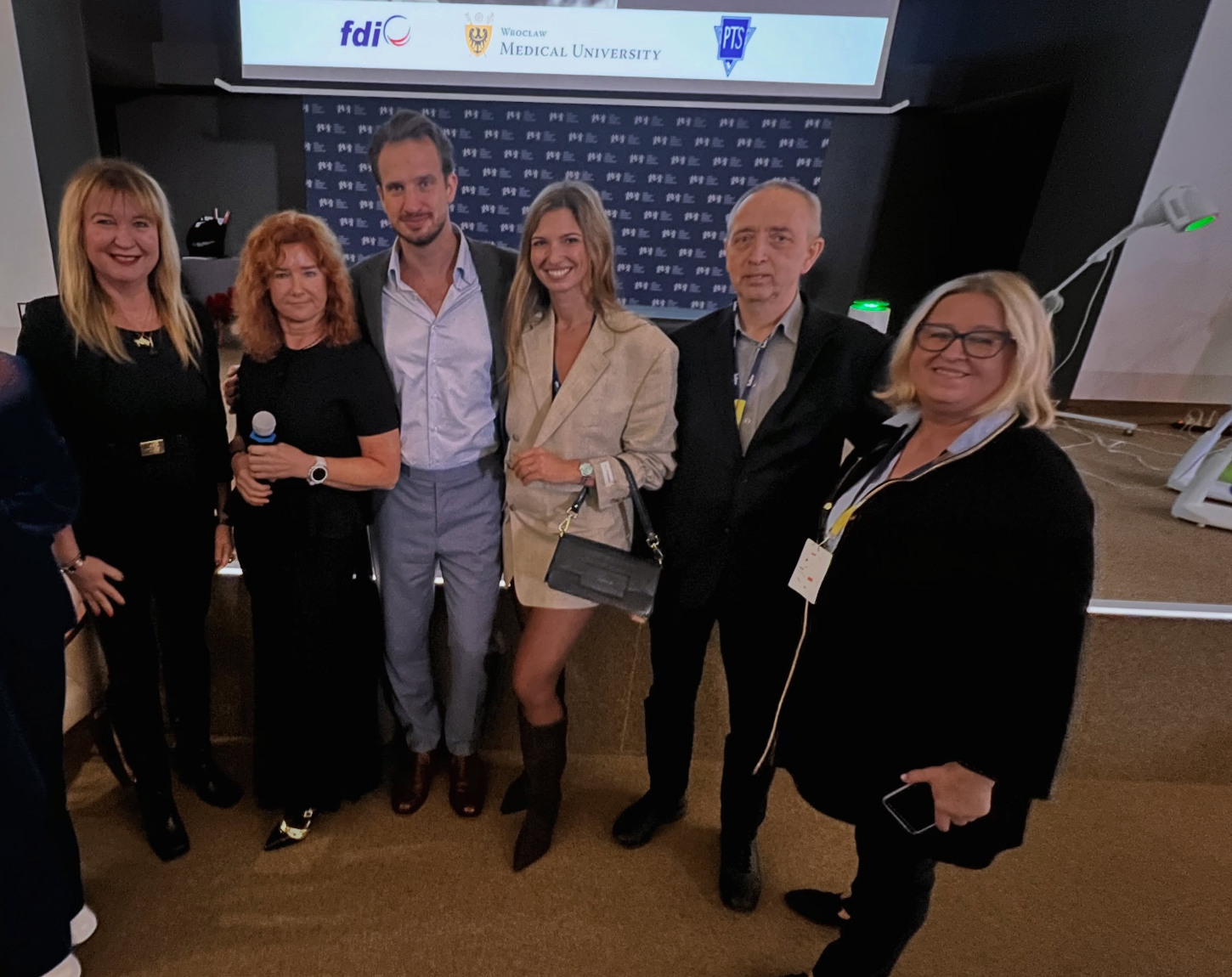
PERI-EDU took part in SPIDER 2026 in Katowice—an interdisciplinary medical conference focused on clinical complications, decision-making and patient safety. The meeting created a forum for discussing difficult cases openly and for turning adverse outcomes and diagnostic challenges into practical lessons for clinicians.
Chronic pain in peri-implantitis as a clinical warning sign
During the lecture, a clinical case involving persistent pain associated with peri-implantitis was presented. The case demonstrated why symptoms reported by the patient must remain central to clinical assessment, even when the source of pain is not immediately obvious.
Peri-implantitis is commonly assessed through inflammation, bleeding on probing, probing depth, suppuration and progressive marginal bone loss. However, a patient describing persistent or increasing pain requires careful reassessment. Pain should not be dismissed solely because an implant has functioned for many years or because the first examination does not provide a complete explanation.
Listen to the patient
Persistent symptoms are clinically relevant data and may justify extending or repeating diagnostic assessment.
Look beyond one finding
Clinical examination should be integrated with radiological findings, implant-related factors and the patient’s general health.
Learn from complications
Open discussion of difficult cases can improve treatment planning, informed consent and prevention of repeated errors.
PERI-EDU educational resources presented to participants
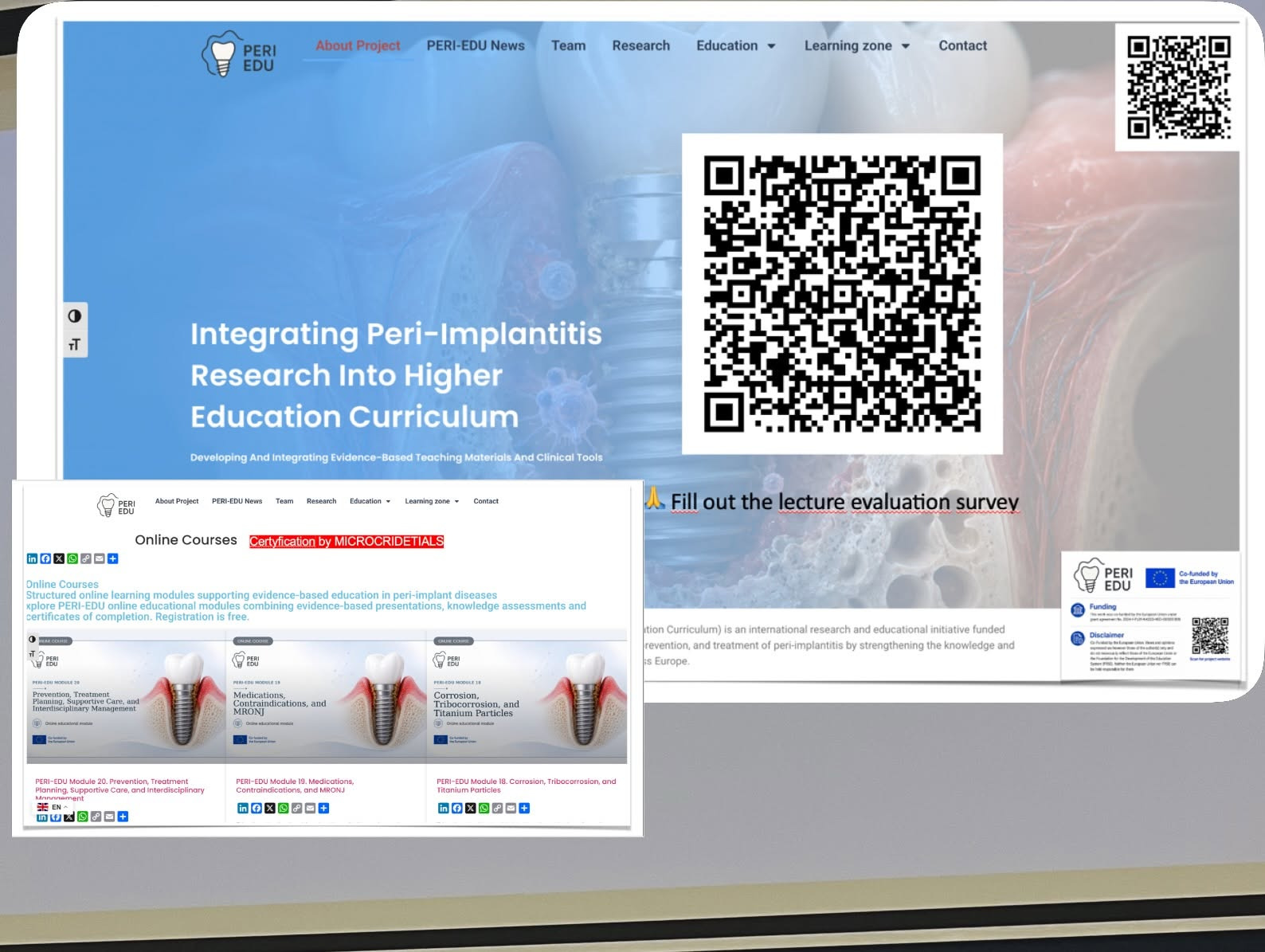
The conference also provided an opportunity to present the PERI-EDU platform and its freely accessible educational resources. Participants were introduced to the project website, research activities and online courses addressing the prevention, diagnosis and treatment of peri-implant diseases.
Recognition for the presentation
Prof. Marzena Dominiak received an award for the best lecture concerning the treatment of complications with the use of personalized bone blocks. The distinction emphasized the clinical value of case-based education and transparent discussion of complex treatment decisions.
Participation in SPIDER 2026 strengthened PERI-EDU’s commitment to clinically relevant education. By linking peri-implantitis research with real patient experiences, the project supports safer decision-making, earlier recognition of complications and more effective interdisciplinary care.
Funding: PERI-EDU is co-funded by the European Union under grant agreement No. 2024-1-PL01-KA220-HED-000251208.
Disclaimer: Co-funded by the European Union. Views and opinions expressed are, however, those of the author(s) only and do not necessarily reflect those of the European Union or the Foundation for the Development of the Education System (FRSE). Neither the European Union nor FRSE can be held responsible for them.