
Microbiological Effects of Dental Laser Wavelengths in Peri-Implantitis Treatment was presented as part of the PERI-EDU research programme during the 9th Congress of the Polish Dental Association at Ptak Warsaw Expo.
Research question
Study design
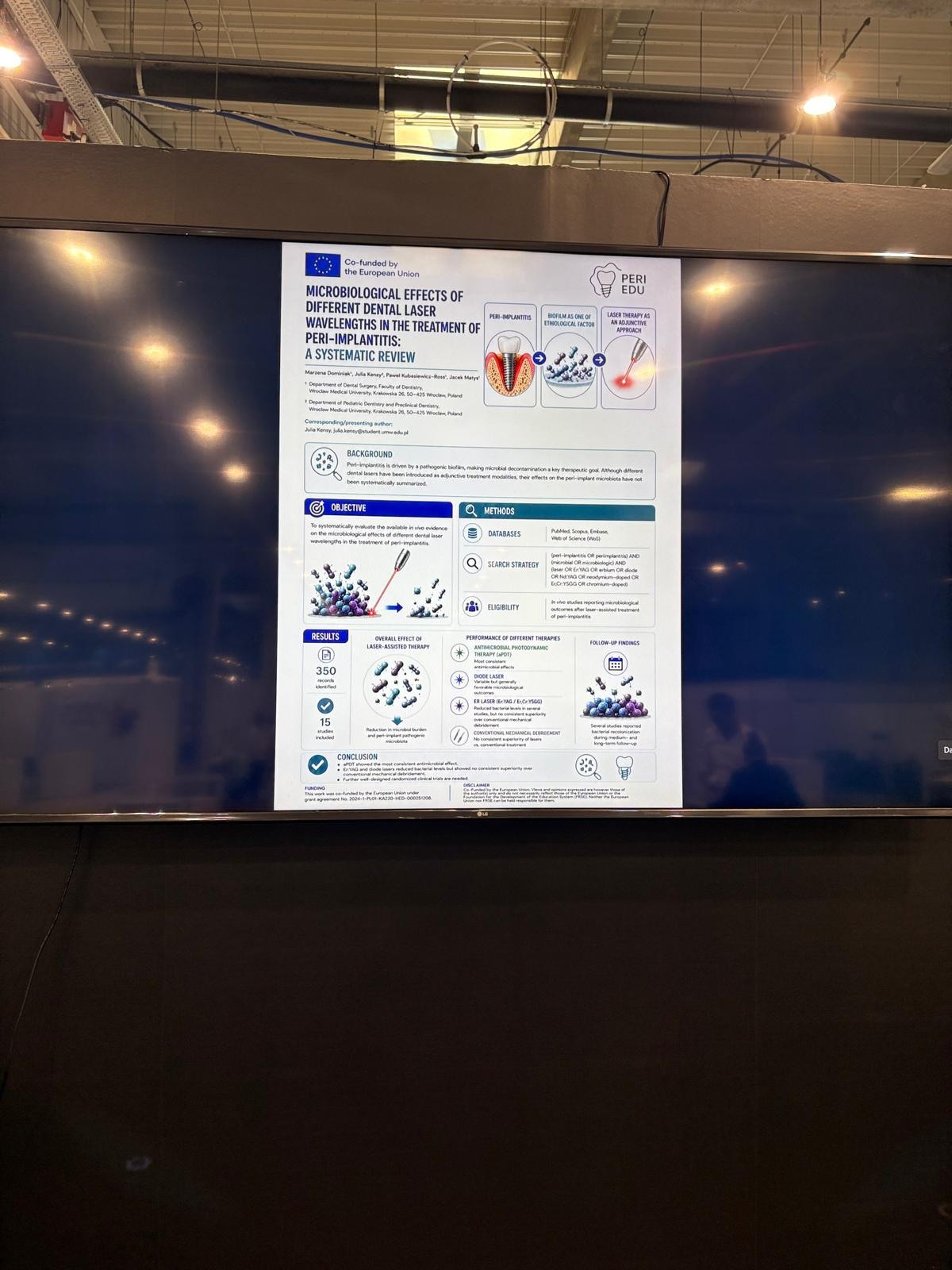
The review included in-vivo studies reporting microbiological outcomes after laser-assisted peri-implantitis treatment. The search combined peri-implantitis, microbiological and laser terms, including Er:YAG, Er,Cr:YSGG, diode and Nd:YAG systems.
Main findings
- Laser-assisted therapy generally reduced total bacterial burden and selected pathogenic microorganisms.
- Antimicrobial photodynamic therapy produced the most consistent antimicrobial findings.
- Erbium and diode lasers reduced bacterial levels in several studies, but consistent superiority over conventional mechanical debridement was not demonstrated.
- Several studies observed bacterial recolonization during medium- and long-term follow-up.
Interpretation
Laser or photodynamic procedures may be useful adjuncts to mechanical decontamination, but they should not be presented as universally superior replacements. Better randomized trials with standardized microbiological outcomes and longer follow-up are needed.
Download the full conference poster
The complete poster is available as a PDF, including figures, numerical results and the selected reference list.
Download poster PDF
View congress report
View abstract supplement
Funding: This work was co-funded by the European Union under grant agreement No. 2024-1-PL01-KA220-HED-000251208.
Disclaimer: Co-funded by the European Union. Views and opinions expressed are, however, those of the author(s) only and do not necessarily reflect those of the European Union or the Foundation for the Development of the Education System (FRSE). Neither the European Union nor FRSE can be held responsible for them.